
A Brighter Path Forward for Children with ADHD
Help your child build real-world focus and self-regulation skills through playful, neurofeedback-inspired training at home

Understanding ADHD: More Than Just "Misbehaving"
ADHD (Attention-Deficit/Hyperactivity Disorder) is not a behavior problem, it's a difference in how the brain develops and functions. Children with ADHD often have unique strengths like creativity and energy, but may struggle with:
- Sustaining attention on tasks or activities
- Containing impulses and thinking before acting
- Regulating activity levels to match the situation
- Managing frustration and emotional responses
These challenges aren't about effort or willingness. They’re linked to executive functions in the brain that support self-control and self-regulation. Our approach focuses on helping children practice and strengthen these skills through engaging, positive training.
How Our Neurofeedback Approach Supports Your Child
Traditional approaches often focus on managing ADHD symptoms from the outside. BrainBit.kids takes a different route helping children learn to self-regulate from the inside out.
The Science Behind It:
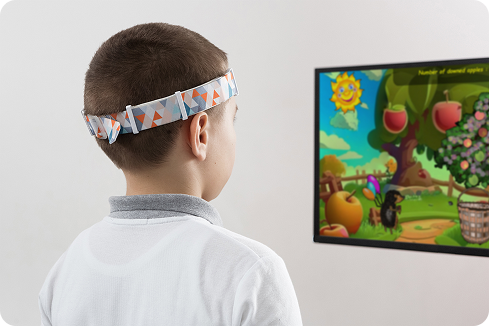
Research shows that children with ADHD often have different patterns of brain activity. Our system uses safe, non-invasive sensors to:
- Monitor brain activity (EEG) and muscle tension (EMG)
- Provide real-time feedback through engaging games
- Help children discover how to find calmer, more focused states naturally
Think of it as a "mirror for the mind" giving children immediate, positive reinforcement when they find their optimal state for focus and calm.
Our Training Protocols: Personalized Brain Training
Every child is unique, so their training should be too. BrainBit.kids uses research-based
neurofeedback training approaches that adapt to your child’s needs and progress over time
TBR (Theta/Beta Ratio) Training
Best for:
Starting the brain training journey
What it does:
Helps balance brainwave patterns associated with daydreaming (theta) and active thinking (beta)
Goal:
Building foundational focus skills
Alpha2 Training
Best for:
Intermediate training after building basic skills
What it does:
Targets specific alpha frequencies linked to calm, alert focus
Research indicates:
This type of training can be helpful in supporting attention and self-regulation
Alpha2/Alpha1 Training
Best for:
Advanced focus development
What it does:
Works with multiple alpha frequencies to support both attention and mental clarity
Research indicates:
This combined approach shows promising results in comprehensive studies of attention and emotional regulation
Personalization Matters:
Every child begins with a simple calibration to establish their unique starting point, so the training meets them where they are.
Expected Outcomes & Research Foundation
What Families Notice
Based on feedback from parents and educators using our approach, children typically show improvements in:
- Increased ability to stay with challenging tasks
- Better recognition of when they're becoming frustrated or distracted
- Improved emotional regulation and frustration tolerance
- Stronger self-awareness of their focus states
- More consistent follow-through on instructions and routines
Our Research Foundation:
BrainBit.kids is built on serious scientific research, including the work of Professor Olga Bazanova and other neuroscientists. Key findings from the research underlying our approach show:
- Significant improvements in attention and concentration measures
- Better emotional regulation and impulse control
- Enhanced cognitive performance on standardized tasks
- Positive changes in brain activity patterns associated with focus
Important:
Individual results may vary, and consistent practice is important for developing skills. Most children complete a course of 20 sessions (16 minutes each, 3-4 times per week) to build lasting skills.
Frequently Asked Questions
-
Families and educators often report that, with consistent use, children may:
- Find it easier to get started on tasks
- Recognize when they are getting overstimulated or frustrated
- Recover from emotional outbursts more quickly
- Stay with activities a bit longer before drifting off
- Show more awareness of their own “focus state”
Ready to Support Your Child's Journey?
Help your child develop the focus and self-regulation skills they need to thrive.